




Forklift & Stacker Specifications Explained Simply

Most buyers and operators often feel confused when they first go through stacker technical datasheets. Many industry terms can seem tricky at first glance, including rated load, lifting height and free lifting height. It is also quite common to wonder why two stackers with the same 2-ton loading capacity are priced so differently. Meanwhile, procurement personnel always concern whether the equipment can work flexibly and stably within the narrow aisle space of their own warehouses.
Actually, it is easy to get familiar with stacker specifications if you master the core judging standards. Once you learn several key performance parameters, you can easily tell whether a stacker fits your warehouse layout and daily working conditions.

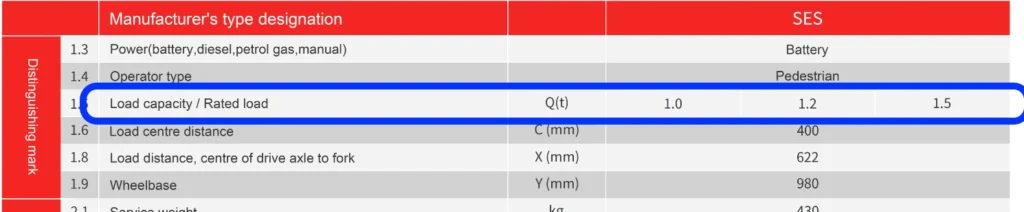
Taking the parameter table of our QSLIFT SES15 self-lifting stacker as a practical example, we will sort out all mainstream stacker technical parameters in this guide.
You will clearly learn:
The practical meaning of each technical parameter;Core data to prioritize when choosing suitable handling equipment. Simple and efficient ways to read stacker specification sheets quickly.
In addition, most of the selection standards shared in this article are also applicable for reference when you purchase pallet trucks and other types of warehouse forklifts.

1.Rated Load Capacity
Rated load capacity is one of the key performance indicators of a stacker.For instance, common specifications such as 1.0 ton or 1.2 tons indicate the maximum load weight the equipment is designed to handle. However, this value is based on a specified “load center distance” under standard operating conditions. Therefore, even if a stacker or forklift is rated at 2 tons, it does not mean the machine can safely lift 2 tons in every working scenario.


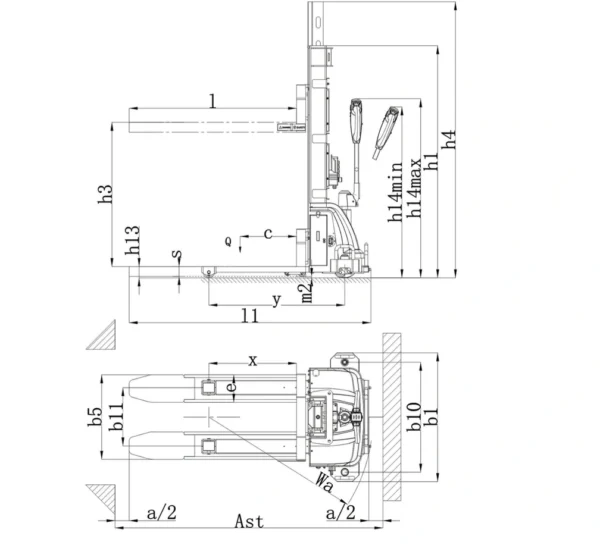
2. Maximum Lift Height (h3),Maximum Lift Height, also known as h3, refers to the highest position the stackers can reach during lifting operations.Typical lift heights are 3000mm, 4500mm, and 6000mm. When choosing the correct stacker model, two key factors should be considered: the height of your warehouse racking system and your actual stacking needs. For instance, if your storage racks are 4 meters high, it is generally recommended to select a stacker with a lift height of at least 4.5 meters to ensure safe and efficient operation.

3. Lowered Mast Height (h1),Lowered Mast Height, commonly referred to as h1, indicates the minimum overall height of the mast when fully lowered.This specification is essential for determining whether the stacker can move smoothly through warehouse entrances, elevators, or shipping containers. For example, if your warehouse doorway height is 2200mm, the lowered mast height of the equipment must remain below 2200mm to allow proper access.
4. Free Lift Height (h2)Free Lift Height, also known as h2, is a critical parameter in warehouse material handling. It describes how high the forks can rise before the mast itself begins to extend upward.This feature is especially useful in environments with limited overhead clearance, such as containers, underground storage areas, or low-ceiling warehouses. A higher free lift height allows the stacker or forklift to operate more efficiently in confined spaces without increasing the overall mast height too early.

5. Aisle Width Requirement (Ast)Aisle Width Requirement, also known as Ast, is one of the less familiar specifications for first-time forklift buyers. It refers to the minimum aisle space needed for the stacker to perform a standard 90-degree stacking maneuver.This parameter is especially important when planning warehouse layouts and optimizing storage density. A smaller Ast value means the stacker can operate efficiently in narrower aisles, helping maximize warehouse space utilization. Therefore, when selecting a forklift or stacker, the aisle width of your warehouse should always be carefully considered.

For example, if Ast = 3200mm, it means the warehouse aisle width must be at least 3.2 meters. Otherwise, the stacker may not have enough space to turn and complete stacking operations safely and efficiently.
6. Turning RadiusTurning Radius is a key specification that reflects the maneuverability and flexibility of a forklift. In general, the smaller the turning radius, the easier it is for the forklift to operate in confined or narrow warehouse spaces.This parameter is particularly important in high-density storage environments where aisle space is limited. Forklifts with a smaller turning radius can improve operational efficiency, reduce maneuvering difficulty, and maximize warehouse space utilization.

7. Fork Length and WidthFork Length and Width are also essential specifications when selecting the right material handling equipment.
These dimensions help determine whether the forklift or stacker is compatible with your pallets, racks, and cargo size.Choosing the correct fork size can improve handling efficiency and ensure safe operation. If the forks are too short or too narrow, they may not properly support the load. On the other hand, oversized forks may affect maneuverability in limited warehouse spaces. Therefore, it is important to match the fork dimensions with your actual pallet and storage requirements.

8. Battery Type and CapacityBattery type and capacity are also key factors when choosing a stacker or pallet truck.
For example, you should confirm whether the equipment uses a lithium battery or a lead-acid battery, as different battery types offer different charging efficiency, maintenance requirements, and service life. A common battery specification is written as:48V / 560AhWhere:V (Voltage) = Battery voltage Ah (Ampere-hour) = Battery capacityIn most cases, a larger Ah value means the equipment can operate for a longer period before recharging.
If the number of specifications mentioned above feels overwhelming, we recommend focusing on four core questions when selecting a stacker or forklift:
-What is the required load capacity?
-How high does it need to lift?
-Are the turning radius and Ast aisle width suitable for your warehouse layout?
-What type of battery does it use?

Finally, it is important to understand that some specifications are not fixed under all working conditions. A typical example is load capacity. Many people believe that if a stacker is rated for 2 tons, it can lift 2 tons at any height. In reality, the higher the lifting height, the lower the actual load capacity becomes due to reduced stability.
As explained earlier in this article, lifting height directly affects the balance and safety performance of the equipment. We previously discussed this topic in detail and also recorded a Serbian-language video explanation. You can watch it here:

Click here to watch the video
If you have any additional questions about common stacker specifications or forklift parameters, feel free to contact us anytime.

Thank you for your message. We will contact you as soon as possible!

Become a Distributor