 English


Warehouse Safety Starts With This One Number: Turning Radius
Don’t Ignore Turning Radius — A Key Factor in Warehouse Equipment Performance. When evaluating material handling equipment, many companies focus on lifting capacity, price, or brand reputation, while overlooking one of the most important operational parameters: the turning radius of the machine.
For warehouses in Serbia, this factor is particularly important.
Unlike newly designed logistics centers, many Serbian warehouses are converted or older industrial facilities that were not originally built for modern material handling operations. As a result, aisle widths are often limited, especially in older buildings where maneuvering space is extremely tight.
In these environments, the turning radius directly impacts whether the equipment can operate efficiently—or even function at all. No matter how competitive the price or how famous the brand may be, equipment that cannot move smoothly inside your warehouse becomes a costly mistake.
In day-to-day warehouse operations, turning is a constant action. Every pallet movement involves maneuvering, and a single stacker or forklift may perform hundreds of turns during one shift. Equipment with poor maneuverability often requires repeated reversing and continuous angle correction, slowing down workflow and reducing overall operational efficiency.
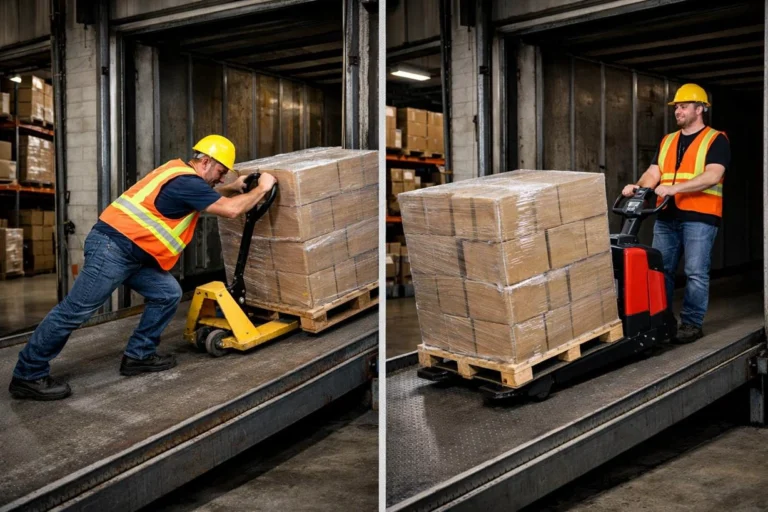
Safety is another critical concern. Many warehouse accidents occur during turning or pallet handling, including collisions with shelving, products, or workers. In narrow aisles, even a small operating error can quickly become a serious safety hazard.
Additionally, not every warehouse operator has extensive driving experience or professional training. Machines that are difficult to maneuver increase the learning curve for new employees and create frustration for experienced operators, ultimately affecting staff efficiency and even recruitment stability.
In practical warehouse applications, the turning radius is far more than just a specification on a technical datasheet. It is a key factor that influences operational flexibility, workplace safety, labor efficiency, and overall warehouse productivity.
To better demonstrate these risks, we recorded a short video example:
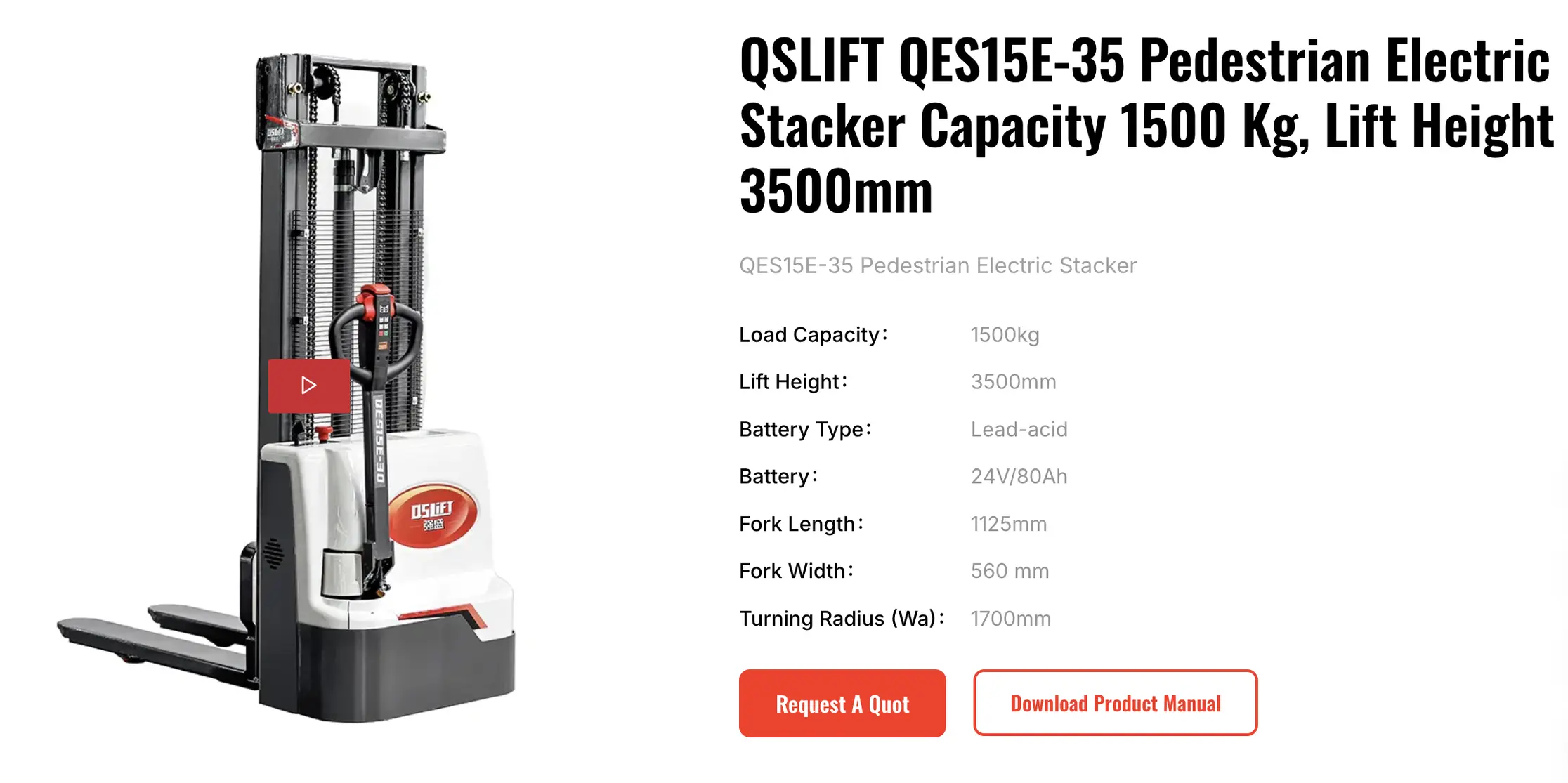
QSLIFT clearly marks every product’s turning radius on its description page.