English




Scrubber Dryers, Sweepers and Sweeper-Scrubber Dryers: What’s the Difference?
When choosing commercial floor cleaning equipment, it can be difficult to distinguish between scrubber dryers, sweepers and sweeper-scrubber dryers, especially if you are unfamiliar with these machines. Some look very similar and may all have brushes, water tanks or an operator’s seat, but they handle dirt and debris in different ways.
The first question to ask is: Does the floor mainly need loose debris removed, attached dirt scrubbed away, or both?
What Is a Scrubber Dryer?
A scrubber dryer is primarily designed for wet cleaning hard floors. During operation, clean water or a correctly diluted cleaning solution is delivered to the disc or cylindrical brushes. The brushes mechanically loosen dirt, while a squeegee and vacuum system recover the dirty water into a recovery tank.
Scrubber dryers are suitable for areas that require regular scrubbing, such as warehouse aisles, production facilities, shops and commercial buildings. Brushes and cleaning agents should be selected according to the floor material and type of dirt.
Can a Scrubber Dryer Pick Up Floor Debris Directly?
A conventional scrubber dryer should not be treated as a debris collection machine.
The squeegee is primarily designed to recover dirty water. If the floor contains significant amounts of paper scraps, packaging film, strips of wood or other solid debris, it should be swept first. Otherwise, debris may cause blockages, become tangled in the brushes or reduce water recovery performance.
Some cylindrical-brush scrubber dryers include a pre-sweeping function and debris collection system. However, you should check the machine’s actual design rather than assume that every cylindrical-brush model has these capabilities.
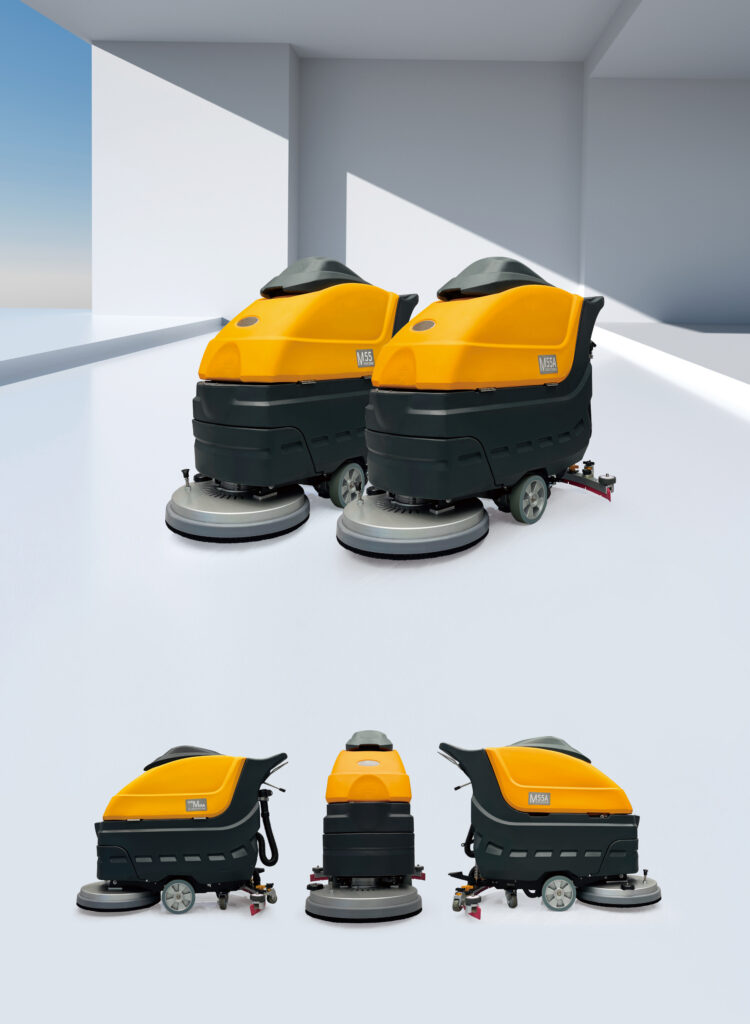
Product Example: QSCLEAN QSM55 Walk-Behind Scrubber Dryer
The QSM55 is a walk-behind scrubber dryer for conventional wet floor cleaning. For facilities that mainly require routine scrubbing and dirty water recovery, this type of machine provides a practical starting point for equipment selection.
What Is a Floor Sweeper?
A floor sweeper primarily uses rotating brushes to collect loose solid debris into a hopper. Models equipped with a vacuum filtration system also use airflow and filters to control dust generated during sweeping.
Its main task is to remove loose dust and debris, such as sand, small paper scraps and other suitable materials found on warehouse floors.
Can a Sweeper Remove Attached Floor Stains?
A conventional sweeper is primarily designed for sweeping. It cannot replace the scrubbing action of a scrubber dryer.
Where dirt adheres to the floor or stains require wet cleaning, removing loose surface debris is usually not enough. An appropriate scrubbing process is also needed.
Also, a water tank or spray system does not necessarily mean that a machine can scrub floors. Some sweepers spray water to suppress dust. This is different from applying cleaning solution, scrubbing the floor and recovering dirty water with a squeegee.
What Is a Sweeper-Scrubber Dryer?
A sweeper-scrubber dryer combines solid debris collection with wet floor scrubbing and dirty water recovery. Depending on the design, sweeping may be performed by a separate pre-sweeping unit or integrated into the cylindrical-brush cleaning system.
This type of machine is suitable for facilities with both moderate amounts of loose debris and attached dirt, where reducing separate cleaning steps is a priority.
Can a Sweeper-Scrubber Dryer Eliminate Pre-Sweeping Completely?
This depends on the type and amount of debris, as well as the machine’s capabilities.
A machine with debris collection can reduce some pre-sweeping work. However, large objects, long packaging straps, film that could become tangled and materials outside the machine’s permitted limits should still be removed beforehand.
When selecting a machine, check:
- Whether it has a dedicated solid debris collection system.
- Which types and sizes of debris it can collect.
- The hopper capacity and how easily it can be emptied and cleaned.
- Whether it can dry-sweep independently or only collect debris during wet scrubbing.
An integrated debris collection function does not mean that the machine offers all the capabilities of a dedicated sweeper.
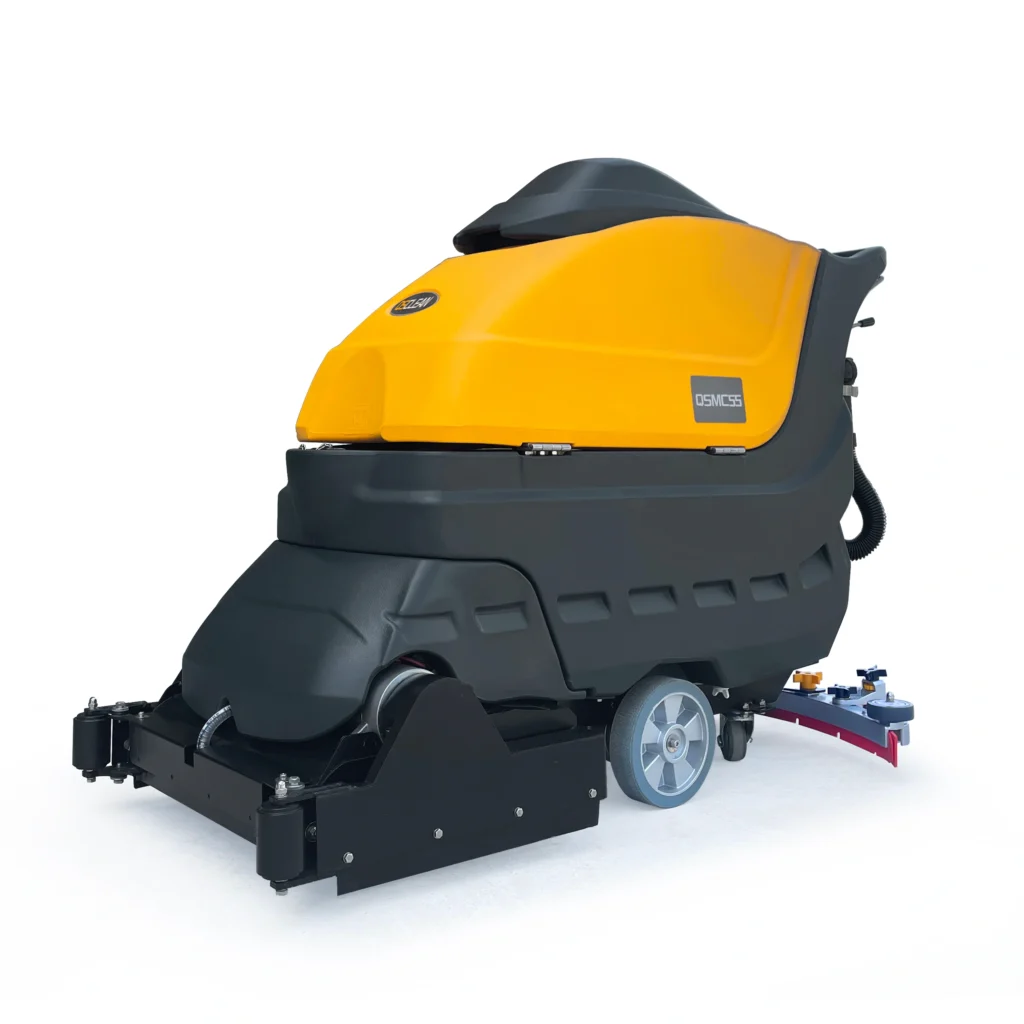
Product Example: QSCLEAN QSMC55 Walk-Behind Sweeper-Scrubber Dryer
The QSMC55 features a dual cylindrical-brush system and a separate debris hopper, combining debris collection with floor scrubbing. This type of machine is worth considering for facilities that need to handle both moderate amounts of solid debris and everyday floor dirt.
Before purchasing, we recommend sending us photographs of your floor and typical debris so we can assess whether the machine suits your cleaning requirements.
How Do You Choose the Right Machine?
Mainly Loose Dust and Debris: Start with a Sweeper
If the main daily task is collecting dust, sand and small debris, focus on sweeping and dust control capabilities. Relevant features include the brush configuration, filtration system and hopper capacity.
Mainly Attached Floor Dirt: Start with a Scrubber Dryer
If there is little solid debris and the main task is removing footprints and everyday dirt, a scrubber dryer is usually a suitable starting point. Consider the floor material, brushes, cleaning agents and water recovery performance when selecting a model.
Both Debris and Attached Dirt: Consider Combined or Separate Cleaning
If sweeping and wet scrubbing are both required regularly, compare two approaches:
- Use a sweeper-scrubber dryer with suitable capabilities.
- Sweep first, then use a scrubber dryer.
The more suitable approach depends on the amount of debris, site layout, cleaning frequency and equipment maintenance requirements.
Product Example: QSCLEAN QSMC90 Ride-On Sweeper-Scrubber Dryer
The QSMC90 combines sweeping, floor scrubbing and dirty water recovery in a ride-on machine. Its dual cylindrical-brush cleaning system and 25 L debris hopper collect suitable debris during scrubbing, while the 200 L solution tank and 210 L recovery tank support extended wet cleaning tasks.
This model is worth considering for larger facilities that need to handle both loose debris and attached dirt, provided that aisle widths and turning spaces can accommodate a ride-on machine.
Equipment selection should also account for the type of debris, floor material and cleaning frequency. Long packaging straps, film that could become tangled and debris beyond the machine’s collection capabilities should still be removed beforehand.

What Else Should You Consider?
Once you have identified the appropriate cleaning method, check whether the equipment fits your site.
Aisle Width and Turning Space: The machine must pass through doorways, move between racks and negotiate corners. Cleaning width alone is not enough to determine suitability.
Floor Material: Brushes and cleaning agents must be compatible with the floor. Carry out a small test in an inconspicuous area where necessary.
Actual Cleaning Time: A machine’s stated area performance does not guarantee the same hourly output on site. Turning, avoiding obstacles, refilling, draining and emptying debris all affect actual productivity.
Maintenance and Consumables: Beyond the purchase price, check the availability of brushes, squeegee blades, filters, batteries and commonly required spare parts.
Choose Equipment Around Your Cleaning Task
If you are selecting equipment for a warehouse, factory or commercial facility, send QSCLEAN details of your floor material, cleanable area and aisle widths, together with photographs of typical dirt and debris. This will help us assess the most suitable type of machine for your application.
Explore the QSCLEAN Floor Cleaning Equipment Range →