English




Pallet Truck Manufacturing Costs: Why Similar Trucks Have Different Prices
When gathering market feedback, we often hear the same question:
“Why do electric pallet trucks and stackers vary so much in price when they look similar and have comparable load capacities?”
Buyers can easily compare appearance, rated load capacity and price. However, pallet truck manufacturing costs also depend on materials, key components, structural design, production processes and quality control. The same applies to electric stackers.
With 15 years of manufacturing experience, QSLIFT produces equipment under its own brand and provides long-term manufacturing services for leading global brands. This experience gives us insight into the differences in components and manufacturing requirements behind seemingly similar machines.
Covers, Frames and Forks: Differences in Materials and Construction
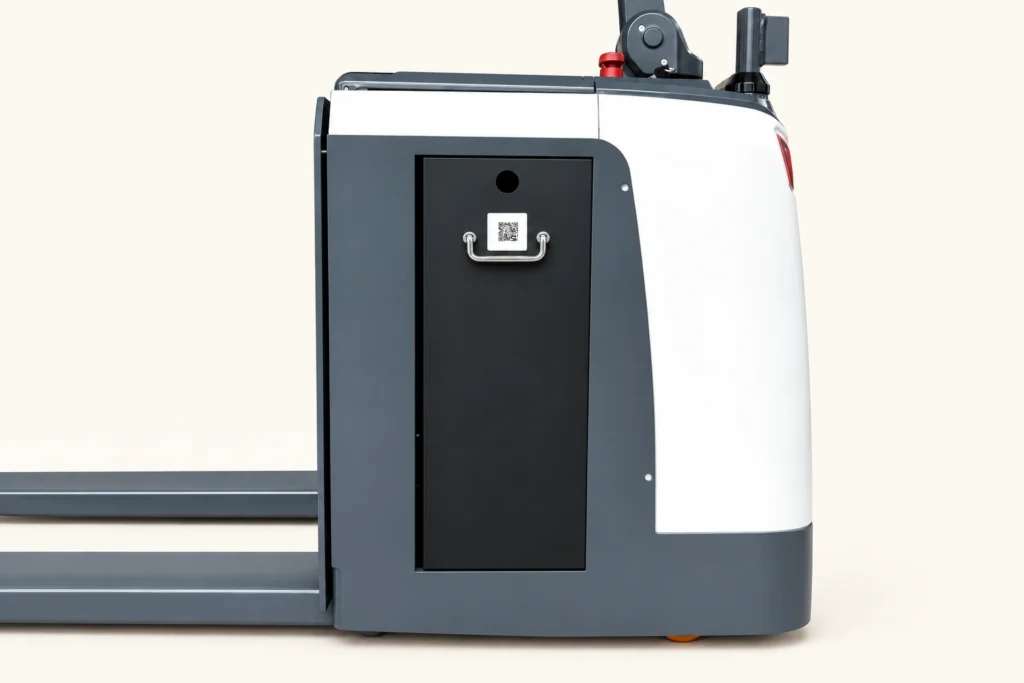
Battery covers provide a useful example. Some trucks use plastic covers, while others use steel. However, the material category alone does not determine quality.
Plastic components can differ in material formulation, thickness, reinforcement and moulding quality. Steel components can vary in steel grade, thickness, welding methods and corrosion protection.
Each design also serves a different purpose. Plastic covers can reduce weight, while steel covers can provide mechanical protection suited to particular working conditions. Buyers should therefore consider whether the cover suits the operating environment, protects internal components effectively and is easy to replace if damaged.
The same principle applies to frames and forks. Forks that look similar may differ in material, cross-sectional design, reinforcement and weld quality. These differences affect manufacturing costs and can influence resistance to deformation and long-term durability.
Batteries: The Same Rated Capacity Does Not Mean the Same Quality
Batteries account for an important part of electric warehouse equipment manufacturing costs. Buyers often focus on battery type—lithium-ion or lead-acid and rated capacity. However, batteries with the same voltage and capacity ratings can still differ in quality and performance.
For a closer comparison of lithium-ion batteries, consider:
- Cell sourcing and consistency between production batches.
- The protective functions of the battery management system (BMS).
- Battery pack connections, mounting and protective design.
- Compatibility between the battery and charger.
- Capacity, service life, warranty terms and supply chain traceability.
Sourcing validated cells and battery systems involves costs. Supplier audits, incoming inspections and batch traceability also require resources.
Therefore, battery comparisons should go beyond brand names and capacity figures. Technical specifications, quality control and after-sales support also matter.
A larger battery is not necessarily the best choice for every application. Equipment used briefly each day may need a different battery configuration from equipment used continuously.
Motors, Drive Systems and Controllers: Matching the Duty Cycle
Two pallet trucks may perform the same basic task but be designed for different levels of use.
The motor, gearbox, braking system and controller affect power delivery, operating response, heat management and maintenance requirements. Matching and tuning the control software also requires development and validation.
For occasional daily handling, a light-duty truck may be sufficient. However, warehouses with frequent starts and stops, longer travel distances or sustained operation need a drive system designed for those demands.
As a result, comparing motor power or rated load capacity alone may not reveal the full difference between two trucks.
Hydraulic Systems and Masts: Key Cost Factors for Stackers
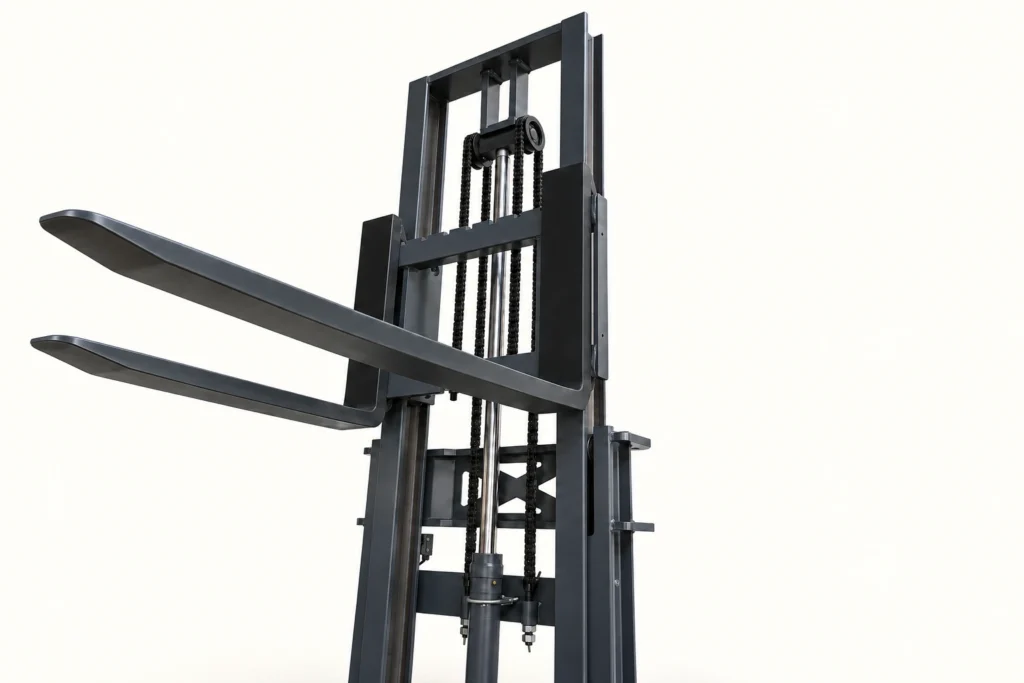
Hydraulic systems and masts are significant manufacturing cost factors for electric stackers.
The selection of pumps, cylinders, seals, valves and hydraulic lines affects lifting, lowering and maintenance requirements. Machining and assembly quality also play a role.
Mast construction involves structural sections, chains, rollers, manufacturing tolerances and overall design. Single-stage, two-stage and three-stage masts have different manufacturing requirements. Free lift adds further design considerations.
Importantly, two stackers rated at 1.5 tonnes do not necessarily have the same capacity at every lift height. Buyers should check the permitted load at their required height and actual load centre, using the truck’s load capacity chart.
Wheels and Bearings: Small Components with a Daily Impact
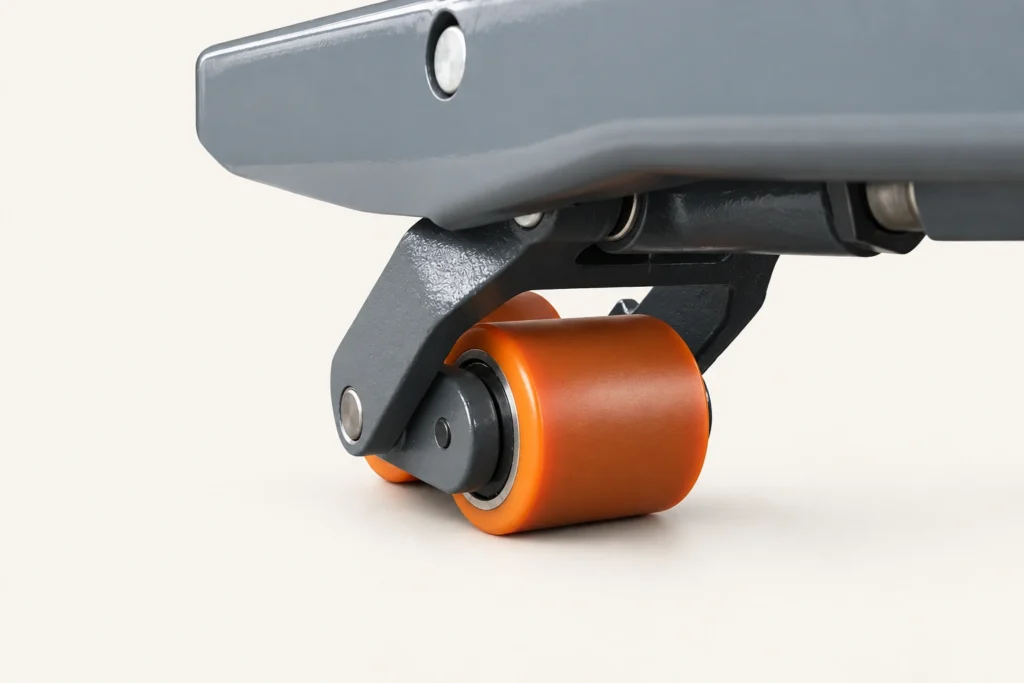
Wheels may appear to be minor components, but they carry loads and face friction and floor impacts every day.
Wheel material, hardness, core construction, bearings and manufacturing quality can affect rolling resistance, noise, wear and handling.
Nylon, polyurethane and rubber wheels each have suitable applications. No single material is ideal for every environment.
Smooth floors, rough surfaces, wet conditions and noise-sensitive areas may require different wheel specifications. Buyers should therefore compare wheel configurations against their actual operating conditions.
Manufacturing Processes and Quality Control: Costs Beyond Components
Manufacturing costs include more than the parts themselves. They also include the processes required to assemble those parts into a reliable machine.
Machining accuracy, welding control, surface treatment, assembly consistency and final inspections all require equipment, skilled personnel and time.
Quality control also goes beyond checking whether a truck powers on and moves. Depending on the product and production process, it may include:
- Material and component inspections.
- Load testing.
- Hydraulic system checks.
- Electrical function checks.
- Durability validation during product development.
These investments are difficult to assess from product photographs. Nevertheless, they are an important part of understanding manufacturing costs.
For dealers purchasing in volume, consistency between production batches is particularly relevant.
Selling Price Is Not the Same as Manufacturing Cost
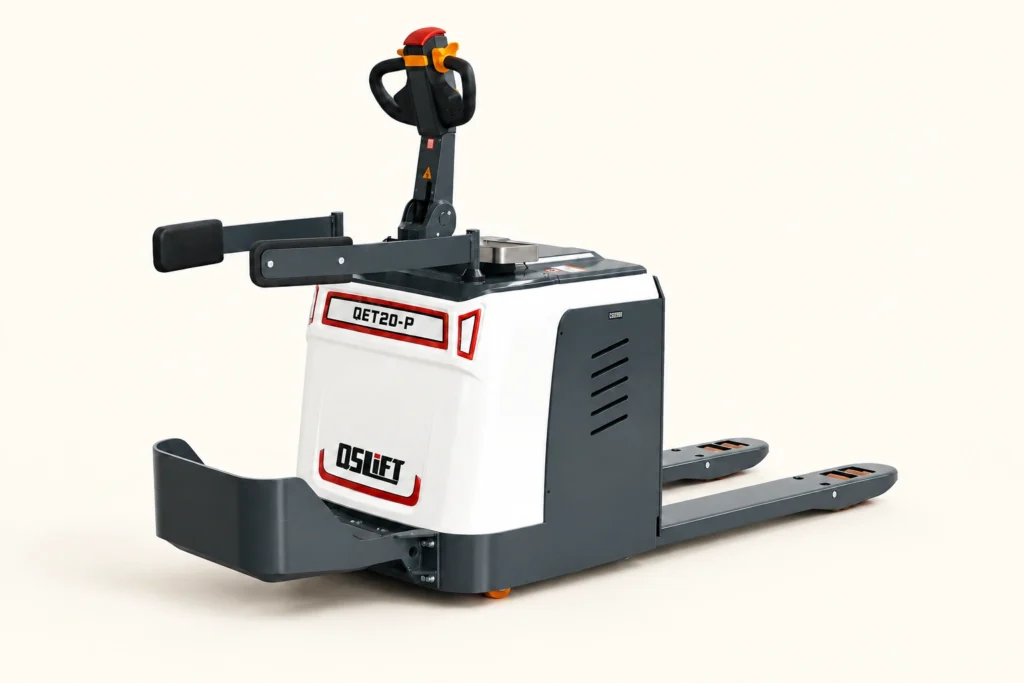
Manufacturing costs explain only part of the final selling price.
Transport, import costs, local inventory, distribution channels, warranty coverage and after-sales services can also affect a quotation. Promotions and stock clearance may change prices as well.
A lower price does not automatically mean lower quality, and a higher price does not automatically mean a better fit.
A meaningful comparison starts with the equipment configuration and service terms. Buyers can then assess whether the price represents good value for their requirements.
What Should Buyers and Dealers Compare?
The aim is to find reliable equipment that meets operational needs, fits the budget and is straightforward to maintain.
When comparing pallet trucks or stackers, review:
- Actual load weights, travel distances, daily operating hours and floor conditions.
- Battery specifications, charging arrangements and warranty terms.
- Permitted stacker capacity at the required lift height.
- Key components, protective design and quality control.
- Spare parts availability, repair support and services included in the quotation.
For dealers, understanding these differences is especially important. Customers often need more than a quotation. They need a clear explanation of why similar-looking machines may suit different applications and perform differently over time.
The purchase price is only the starting point. Battery replacement, wear parts, repairs and downtime also contribute to the total cost of ownership.
Ultimately, the most useful comparison is whether the equipment can perform reliably and consistently under the intended working conditions.