Egy elektromos raklaprakodó a töltőpont mellett várakozik egy műszak kezdetén. A kijelző bekapcsol, és a targonca tegnap még normálisan működött. Megkezdheti-e a kezelő a raklapok mozgatását?Még ne. Egy rövid átvizsgálás feltárhat egy sérült kereket, hidraulikus szivárgást vagy hibás biztonsági vezérlést, mielőtt a targonca belépne egy forgalmas raktári folyosóra. Ez az elektromos raklaprakodó-ellenőrzési ellenőrzőlista a QSLIFT QES10E és a QES15E modelleket használja gyakorlati példaként. Mindig kövesse az adott modell kezelési útmutatóját, mivel az alkatrészek és az ellenőrzési eljárások eltérhetnek.
Miért kell minden műszak előtt átvizsgálni az elektromos raklaprakodót?
Az elektromos raklaprakodók egyesítik a gépi hajtást, a teheremelést, a fékezést, az akkumulátorrendszereket és a kezelő biztonsági vezérlőit. Bármelyik területen fellépő hiba hatással lehet a kezelőre, a közeli gyalogosokra, az árukra, az állványzatra és magára a gépre. A folyamatos műszak előtti ellenőrzés segít a raktári csapatnak abban, hogy:
- – A látható sérülések korai felismerése
- – Megakadályozza, hogy a kisebb hibák nagyobb javításokká fajuljanak
- – Elkerülhető állásidő csökkentése
- – A nem biztonságos berendezések kivonása a forgalomból
- – A kezelők és a szerelők közötti kommunikáció javítása
- – Világos ellenőrzési napló vezetése. Végezze el az átvizsgálást a targonca műszakbeli első használata előtt.
Ellenőrizze újra ütközés után, miután egy másik kezelő problémát jelez, vagy ha a targonca viselkedése megváltozik.
Kezdje a padlóval és a környező területtel
Sétáljon körbe a raklaprakodó körül, mielőtt megérintené a vezérlőket. Ellenőrizze a hajtóegység és az emelőoszlop alatti padlót olaj, víz vagy egyéb megmagyarázhatatlan folyadék szempontjából. Ne keresse a hidraulikus szivárgást a kezével. A túlnyomásos folyadék behatolhat a bőrbe.
Keresse még a következőket is:
- Stretcsfólia, csomagolópántok vagy drót a kerekek közelében
- Laza tárgyak a töltési terület környékén
- A töltő, a kábel vagy a csatlakozó sérülése
- Nyomok, amelyek az állványzattal vagy a falakkal való ütközésre utalnak
- A targonca útvonalát elzáró tárgyak
Ha nem tudja azonosítani a szivárgás forrását, helyezze üzemen kívül a targoncát, és kérje meg egy szakképzett szerelőt az ellenőrzésére.
Hat ellenőrizendő terület gyalogkíséretű elektromos raklaprakodón
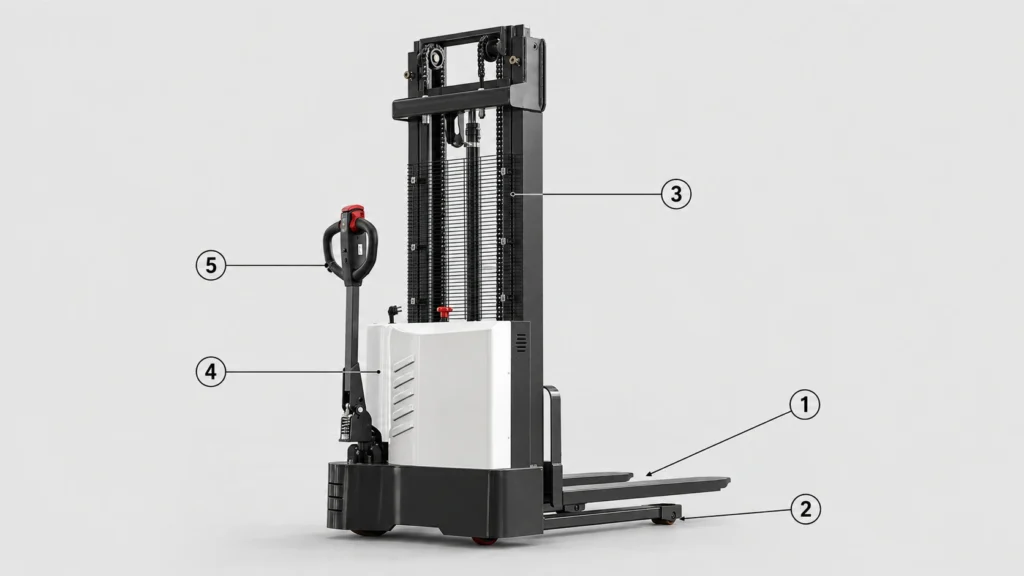
Az alábbi ábra a QES sorozatú targonca főbb külső részeit mutatja be.
Ellenőrzési területek: 1 villák; 2 teherkerekek; 3 emelőoszlop, láncok és hidraulikus emelőterület; 4 alváz és burkolatok; 5 vonórúd vezérlői; 6 akkumulátor és vészleállító terület.
1. Villák
Nézze végig mindkét villát a saroktól a hegyéig.
Ellenőrizze a következőket:
- Repedések
- Meghajlás vagy csavarodás
- Egyenlőtlen villamagasság
- Kárt szenvedett villátűk
- Súlyos kopás
- Ütközés jelei A villáknak egyenesnek, párhuzamosnak és egyenletesen elhelyezkedőnek kell lenniük. Ne használja tovább a raklaprakodót, ha az egyik villa alacsonyabbnak, erősebben kopottnak vagy eltérő állásúnak tűnik a másikhoz képest.Soha ne próbálja meg egyengetni vagy hegeszteni a sérült villát hivatalos műszaki értékelés nélkül.
2. Töltőkerekek
A rakodókerekek a padló közelében működnek, és képesek csomagolóanyagot összegyűjteni.
Ellenőrizze a látható kerekeket a következőkre vonatkozóan:
- Vágások, repedések vagy hiányzó anyag
- Csapágyos területek
- Nem egyenletes kopás
- Műanyag fólia, szalag vagy drót
- A kerékrögzítések körül keletkezett sérülések
- Korlátozott mozgás
A sérült vagy elzáródott kerék rezgéseket, rossz követést és a padlóösszekötőelemek átlépésének nehézségét okozhat.
Csak olyan laza törmeléket távolítsunk el, amelyhez biztonságosan el tudunk jutni. Kérjük a technikusot, hogy távolítsa el az akkumulátor belsejében rekedt anyagot.
3. Fenyő, láncok és hidraulikus rendszer
Ellenőrizze a fánkot a védett területen kívülről. Tartsa a kezét, a fejét és a szerszámait távol a felhajtó mechanizmustól.
Keresés:
Látható maró torzulás
Kártevő vagy erősen korrodált láncrészek
A láncok szokatlanul laza vagy egyenetlennek tűnnek
Olaj a hengerek körül, a tömlőkben vagy a csatlakozásokon
A fülke-csatornák belsejében külföldi anyagok vannak
Kárt okozó őrök
Csúszó vagy hiányzó látható rögzítők
Az üzemeltetőnek észlekezett eltéréseket kell észlelnie, nem pedig a láncokat kell megváltoztatnia vagy a fülke-emelőt szétszerelnie. A képzett technikusoknak kell végrehajtaniuk a lánc-méréseket, a beállításokat és a hidraulikus javításokat.
4.Alváz és védőburkolatok
Görjön körbe az hajtóegységet és vizsgálja meg külső állapotát.
Ellenőrizze:
A fedélzárók és a panelek továbbra is biztonságban maradnak
Nincs éles vagy törött szél.
A futómű nem mutat nyilvánvaló sérüléseket.
A szellőzőnyílások tisztaak maradnak
A védővédőtokok helyesen vannak felszerelve
A biztonsági címkék továbbra is olvashatóak maradnak
A kapacitáslemez megtalálható
A törött fedél nem feltétlenül teszi veszélyessé a raklapot. Azonban jelezheti, hogy a teherautó ütközött. Jelentsd a sérülést, hogy a szervizcsapat eldönthesse, megvizsgálja-e a alatta lévő alkatrészeket.
5. Hajtókarok és működtetőgombok
A kormánykerék az üzemeltető és a gyalogos raklapozó közötti fő kommunikációs csatorna.
Mielőtt bekapcsolná a gépet, ellenőrizze:
Csúszós vagy sérült fogantyú
Csúszós kapcsolók vagy gombok
Kár miatt sérült vezérlőházak
Kitépett vezetékek
Hiányzó vezérlőjelek
A kormányrúd, amely nem mozog normálisan
A vizuális ellenőrzés után próbálja ki a vezérlőket egy tiszta területen. Az irányítás, a kormányzás, a felemelés és a leereszkedésnek simán és kiszámíthatóan kell működnie.
Ellenőrizze a fuvola működését, a fékrendszer működését és a kormánykerekes visszajáró biztonsági funkciót is, ha van ilyen. Hagyja abba a működést, ha a kormánygomb elakad, vagy lassan reagál, vagy váratlan mozgást okoz.
6. Akkumulátor, töltéskapcsoló és vészlekapcsoló
Először is győződj meg róla, hogy a töltő kikapcsolt. Ezután vizsgálja meg a látható akkumulátort és a töltőelemeit.
Ellenőrizze ezt:
Az akkumulátor elegendő energiával rendelkezik a tervezett munkához.
A dugasz és a kábelek nem mutatnak látható sérüléseket
A vezetők nem vannak kitéve a veszélynek
A csatlakozók a helyükön vannak
Nem látszik égési vagy túlmelegedési jelek
Az akkumulátor helyesen megtartotta a helyét
A kijelző nem mutat egyetlen megoldatlan akkumulátorhibát sem.
Az vészleállító gombnak hozzáférhető és sérülésmentesnek kell maradnia. Ellenőrizze azt a gép használati útmutatójának megfelelően, és győződjön meg róla, hogy a gomb helyesen visszaállítja a beállításokat.
Ne használjon sérült töltőcsatlakozót vagy -kábelt. Soha ne módosítsa a csatlakozót, és ne hagyja figyelmen kívül az akkumulátor-védelem rendszert.
Közeli megfigyelési pontok
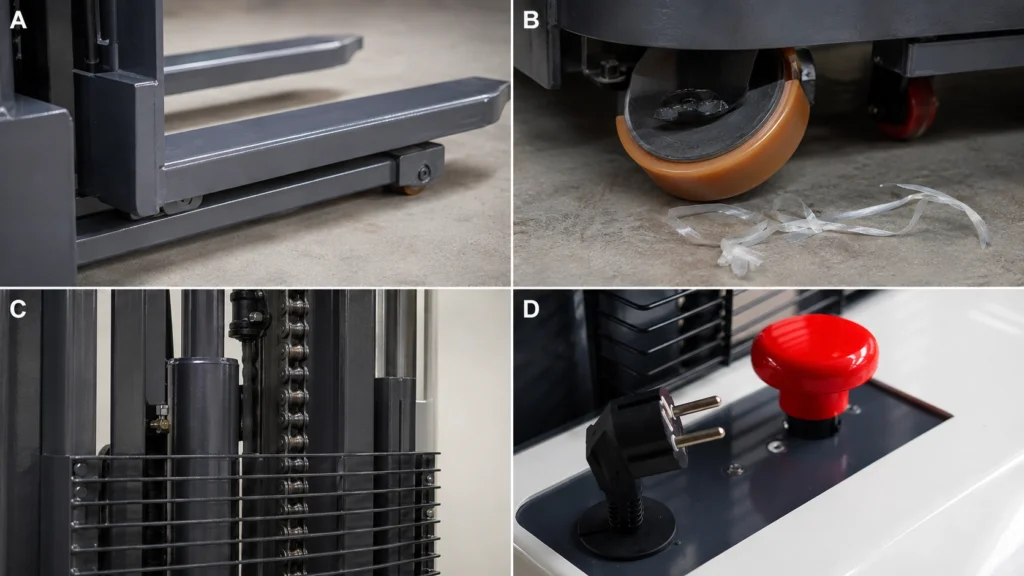
Közeli képek: A, villák és villák sarokrészei; B, a rakodókerék és a közelében lévő csomagolási hulladék; C, a külsőleg látható orsólánc és a hidraulikus alkatrészek; D, a vészfék gomb és a töltőcsatlakozó.Ezek a képek bemutatják az üzemeltetői vizsgálat és a műszaki vizsgálat közötti határt karbantartás. Az üzemeltető láthatja a látható hibákat és ellenőrizheti a normál működést. Azonban az üzemeltető nem szabad eltávolítani a fedeleket, beállítani a láncokat, megnyitni az elektromos rendszereket vagy megpróbálni jogosulatlan javításokat végezni.

 Magyar