Choosing the right dealer demo machines is one of the most important decisions when entering a new material handling equipment market. A well-selected demo fleet helps customers understand how the equipment will perform in their own operations. A poorly selected one may tie up capital in machines that look impressive but do not match local demand. The goal is not to display the largest possible product range. It is to begin with a focused selection that reflects local customer budgets, warehouse conditions and everyday handling requirements.
Start with Real Customer Demand
Before selecting models, dealers should identify the applications they are most likely to encounter:
- What pallet weights do local customers normally handle?
- Do they mainly require horizontal transport or pallet stacking?
- What lifting heights are commonly required?
- Do local warehouses have narrow aisles or low entrances?
- How sensitive are customers to the initial purchase price?
- Is the equipment used occasionally or continuously throughout the day?
The first demonstration machines should represent the needs of the largest realistic customer group—not every possible application.
Electric Pallet Trucks: A Practical Starting Point
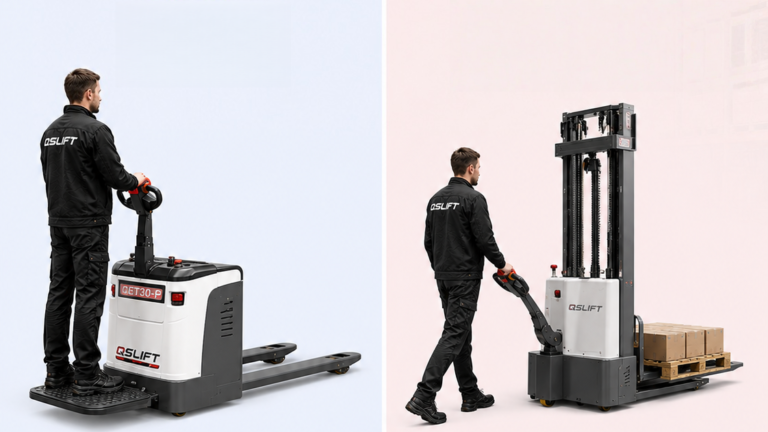
An electric pallet truck is often one of the most useful first demonstration machines because horizontal pallet transport is required across manufacturing, logistics, retail, wholesale and general warehousing.
The QSLIFT EPT15, with a load capacity of 1.5 tonnes, is suitable for lighter warehouse and distribution applications. It provides an accessible upgrade for customers moving from manual pallet trucks to powered handling equipment.
Where 2-tonne capacity is more commonly requested, the EPT20 offers broader application coverage while remaining compact enough for smaller warehouses and loading areas.
Dealers can use these models to demonstrate:
- Powered pallet movement
- Manoeuvring in confined areas
- Low-speed control
- Lithium battery convenience
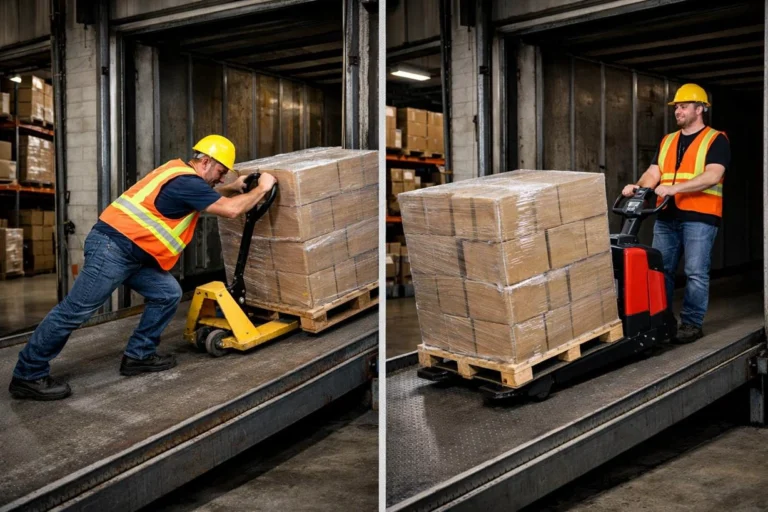
- The productivity difference between manual and electric handling
A new dealer does not necessarily need both models. The choice between the EPT15 and EPT20 should be based on the pallet weights most frequently handled in the local market.
Electric Stackers: Match Capacity and Mast Height to the Market
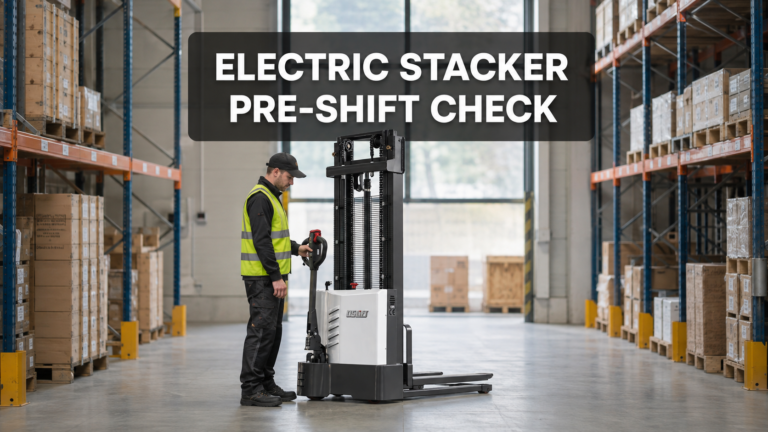
Stacker selection requires more attention because capacity, lifting height and closed-mast height all affect whether a machine is suitable for a particular warehouse.
For lighter and price-sensitive applications, the QES10E provides a practical entry point. It is suitable for customers that need electric pallet lifting and stacking without investing in a larger, higher-capacity machine.
Where customers regularly handle heavier loads, the QES20E offers a more appropriate solution. However, dealers should select it because the local market requires the additional capacity—not simply because a larger specification appears more impressive.
Mast configuration is equally important. A machine may provide the required lift height but still be unable to enter a warehouse if its closed mast is too high.
For this reason, the dealer should consider both the working height inside the warehouse and the height of entrances, doors and other access points.
What We Have Learned from the Serbian Market
Serbia provides a practical example of how local market conditions should influence the choice of demonstration machines.
Many Serbian small and medium-sized businesses are highly price-sensitive. They need reliable warehouse equipment, but their daily operations do not always require the capacity or performance level designed for large logistics centres.
For these customers, a compact model such as the QES10E can be more commercially relevant than a higher-capacity stacker. It covers routine pallet stacking while keeping the investment at a level that is more realistic for smaller businesses.
Warehouse access is another important consideration. Many local warehouses have relatively low entrances. A standard stacker may be able to reach the required storage height but may not be able to pass through the entrance with its mast lowered.
The low-mast QES10E-20 is particularly relevant in these situations. With its more compact mast configuration, it is better suited to warehouses where entrance height is a more important restriction than maximum lifting height.
This demonstrates an important principle: the best demo machine is not always the one with the highest specification. It is the one that solves a common local problem.
A Recommended First Demonstration Package
Expand the Fleet Using Customer Feedback
In most markets, a focused package with two core machines is enough to cover the most common warehouse applications. A third model can then be added according to the dealer’s target customers and sales strategy.
1. One Walk-Behind Electric Pallet Truck
The first machine should normally be an EPT15 or EPT20.
The EPT15 is suitable for customers with lighter handling requirements and provides an accessible upgrade from manual pallet handling. The EPT20 offers 2.0-tonne capacity and may provide broader coverage where heavier pallets are common.
2. One Pedestrian Electric Stacker
The second core machine should represent the capacity and warehouse conditions most commonly found in the local market.
QSLIFT offers three practical capacity options with a 2.0-metre lift height:
The QES10E-20 is suitable for lighter and more price-sensitive applications. The QES15E-20 provides a balanced middle option for dealers serving a wider range of small and medium-sized businesses. The QES20E-20 is more appropriate where customers regularly handle heavier pallets or require 2.0-tonne capacity.
The compact mast configuration of these 2.0-metre models is also relevant in markets where warehouse entrances are relatively low.
3. An Optional Model Based on the Dealer’s Sales Strategy
Dealers that regularly conduct demonstrations at customer locations may consider the SES15 self-lifting stacker as an additional demo machine.
Its self-lifting design allows the machine to load itself into and out of a suitable delivery vehicle, reducing dependence on a forklift or loading dock. This makes it particularly useful for mobile demonstrations, deliveries and customers that need to transport the stacker between locations.
Expand the Fleet When Demand Becomes Clear
Higher-lift and ride-on models should normally be added after the dealer has identified consistent local demand.
Possible next additions include:
This step-by-step approach gives the dealer enough equipment to demonstrate core applications while avoiding unnecessary investment in models that may not match the local market.
The first demonstration machines should help the dealer understand the market as well as generate sales.
After customer visits and product trials, dealers can review:
- Whether the EPT15 or EPT20 receives more enquiries
- Whether customers require the QES10E or the higher-capacity QES20E
- How frequently low entrance height affects stacker selection
- Which lifting heights customers request most often
- Which demonstrations lead to quotations and orders
- Which models may justify keeping in local stock
Future purchases can then be based on actual customer demand rather than assumptions.
Planning Your First Demonstration Fleet?
Contact QSLIFT to discuss your target customers, local warehouse conditions and suitable demonstration models.