Alegerea utilajelor de demonstrație potrivite pentru dealer este una dintre cele mai importante decizii la intrarea pe o nouă piață de echipamente de manipulare a materialelor. O flotă demo bine selectată ajută clienții să înțeleagă cum va funcționa echipamentul în propriile operațiuni. Una selectată slab poate bloca capitalul în utilaje care arată impresionant, dar nu se potrivesc cu cererea locală. Scopul nu este de a expune cea mai mare gamă de produse posibilă. Este de a începe cu o selecție concentrată care să reflecte bugetele clienților locali, condițiile din depozit și cerințele zilnice de manipulare.
Zacznij od rzeczywistego popytu klientów / Rozpocznij od realnego zapotrzebowania klientów
Înainte de a selecta modelele, dealerii ar trebui să identifice aplicațiile pe care le vor întâlni cel mai probabil:
- Ce greutăți ale paleților manipulează în mod normal clienții locali?
- Au nevoie în principal de transport orizontal sau de stivuire a paleților?
- Ce înălțimi de ridicare sunt cerute în mod obișnuit?
- Depozitele locale au culoare înguste sau intrări joase?
- Cât de sensibili sunt clienții la prețul inițial de achiziție?
- Echipamentul este utilizat ocazional sau continuu pe parcursul întregii zile?
Primele mașini de demonstrație ar trebui să reprezinte nevoile celui mai mare grup realist de clienți — nu fiecare aplicație posibilă.
Transpalete Electrice: Un Punct de Plecare Practic
O transpaletă electrică este adesea una dintre cele mai utile prime mașini de demonstrație, deoarece transportul orizontal al paleților este necesar în producție, logistică, comerț cu amănuntul, comerț en-gros și depozitare generală.
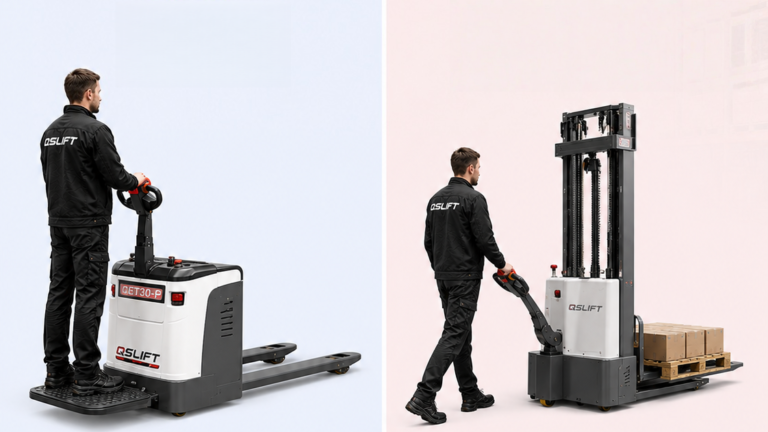
Modelul QSLIFT EPT15, cu o capacitate de ridicare de 1,5 tone, este potrivit pentru aplicații mai ușoare de depozitare și distribuție. Acesta oferă o opțiune accesibilă de modernizare pentru clienții care trec de la transpalete manuale la echipamente de manipulare motorizate.
Acolo unde se solicită mai frecvent o capacitate de 2 tone, modelul QSLIFT EPT20 oferă o acoperire mai largă a aplicațiilor, rămânând în același timp suficient de compact pentru depozite mai mici și zone de încărcare.
Dealerii pot folosi aceste modele pentru a demonstra:
- Deplasarea motorizată a paleților
- Manevrarea în spații restrânse
- Control la viteză redusă
- Avantajele bateriei cu litiu
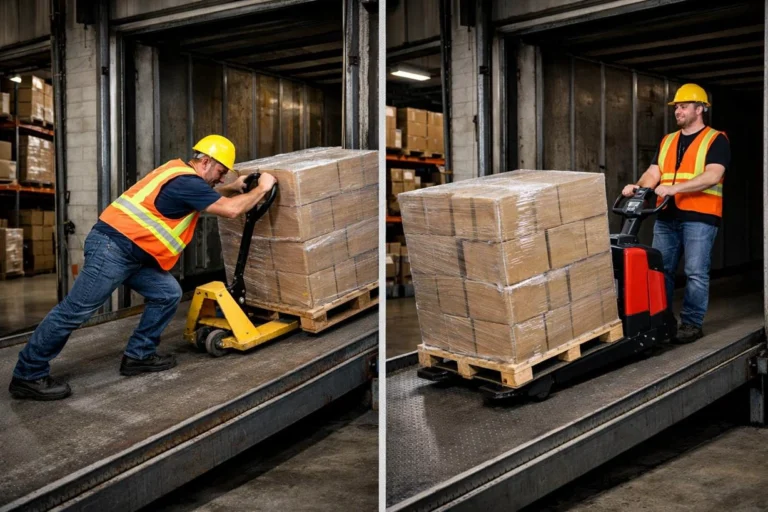
- Diferența de productivitate dintre manipularea manuală și cea electrică
Un dealer nou nu are neapărat nevoie de ambele modele. Alegerea între EPT15 și EPT20 ar trebui să se bazeze pe greutățile paleților manipulate cel mai frecvent pe piața locală.
Stivuitoare Electrice: Corelați Capacitatea și Înălțimea Catargului cu Piața
Selecția stivuitorului necesită mai multă atenție, deoarece capacitatea, înălțimea de ridicare și înălțimea catargului închis afectează toate caracteristicile care fac ca un utilaj să fie potrivit pentru un anumit depozit.
For lighter and price-sensitive applications, the QES10E provides a practical entry point. It is suitable for customers that need electric pallet lifting and stacking without investing in a larger, higher-capacity machine.
Where customers regularly handle heavier loads, the QES20E offers a more appropriate solution. However, dealers should select it because the local market requires the additional capacity—not simply because a larger specification appears more impressive.
Mast configuration is equally important. A machine may provide the required lift height but still be unable to enter a warehouse if its closed mast is too high.
For this reason, the dealer should consider both the working height inside the warehouse and the height of entrances, doors and other access points.
What We Have Learned from the Serbian Market
Serbia provides a practical example of how local market conditions should influence the choice of demonstration machines.
Many Serbian small and medium-sized businesses are highly price-sensitive. They need reliable warehouse equipment, but their daily operations do not always require the capacity or performance level designed for large logistics centres.
For these customers, a compact model such as the QES10E can be more commercially relevant than a higher-capacity stacker. It covers routine pallet stacking while keeping the investment at a level that is more realistic for smaller businesses.
Warehouse access is another important consideration. Many local warehouses have relatively low entrances. A standard stacker may be able to reach the required storage height but may not be able to pass through the entrance with its mast lowered.
The low-mast QES10E-20 is particularly relevant in these situations. With its more compact mast configuration, it is better suited to warehouses where entrance height is a more important restriction than maximum lifting height.
This demonstrates an important principle: the best demo machine is not always the one with the highest specification. It is the one that solves a common local problem.
A Recommended First Demonstration Package
Expand the Fleet Using Customer Feedback
In most markets, a focused package with two core machines is enough to cover the most common warehouse applications. A third model can then be added according to the dealer’s target customers and sales strategy.
1. One Walk-Behind Electric Pallet Truck
The first machine should normally be an EPT15 or EPT20.
The EPT15 is suitable for customers with lighter handling requirements and provides an accessible upgrade from manual pallet handling. The EPT20 offers 2.0-tonne capacity and may provide broader coverage where heavier pallets are common.
2. One Pedestrian Electric Stacker
The second core machine should represent the capacity and warehouse conditions most commonly found in the local market.
QSLIFT offers three practical capacity options with a 2.0-metre lift height:
The QES10E-20 is suitable for lighter and more price-sensitive applications. The QES15E-20 provides a balanced middle option for dealers serving a wider range of small and medium-sized businesses. The QES20E-20 is more appropriate where customers regularly handle heavier pallets or require 2.0-tonne capacity.
The compact mast configuration of these 2.0-metre models is also relevant in markets where warehouse entrances are relatively low.
3. An Optional Model Based on the Dealer’s Sales Strategy
Dealers that regularly conduct demonstrations at customer locations may consider the SES15 self-lifting stacker as an additional demo machine.
Its self-lifting design allows the machine to load itself into and out of a suitable delivery vehicle, reducing dependence on a forklift or loading dock. This makes it particularly useful for mobile demonstrations, deliveries and customers that need to transport the stacker between locations.
Expand the Fleet When Demand Becomes Clear
Higher-lift and ride-on models should normally be added after the dealer has identified consistent local demand.
Possible next additions include:
This step-by-step approach gives the dealer enough equipment to demonstrate core applications while avoiding unnecessary investment in models that may not match the local market.
The first demonstration machines should help the dealer understand the market as well as generate sales.
After customer visits and product trials, dealers can review:
- Whether the EPT15 or EPT20 receives more enquiries
- Whether customers require the QES10E or the higher-capacity QES20E
- How frequently low entrance height affects stacker selection
- Which lifting heights customers request most often
- Which demonstrations lead to quotations and orders
- Which models may justify keeping in local stock
Future purchases can then be based on actual customer demand rather than assumptions.
Planning Your First Demonstration Fleet?
Contact QSLIFT to discuss your target customers, local warehouse conditions and suitable demonstration models.