Wybór odpowiednich maszyn demonstracyjnych dla dealera to jedna z najważniejszych decyzji przy wchodzeniu na nowy rynek sprzętu do obsługi materiałów. Dobrze dobrana flota demo pomaga klientom zrozumieć, jak sprzęt sprawdzi się w ich własnych operacjach. Słabo dobrana może zamrozić kapitał w maszynach, które wyglądają imponująco, ale nie odpowiadają lokalnemu popytowi. Celem nie jest zaprezentowanie jak największej gamy produktów. Chodzi o rozpoczęcie od ukierunkowanego wyboru, który odzwierciedla lokalne budżety klientów, warunki magazynowe oraz codzienne wymagania operacyjne.
Zacznij od rzeczywistego popytu klientów / Rozpocznij od realnego zapotrzebowania klientów
Przed wybraniem modeli dealerzy powinni zidentyfikować zastosowania, z którymi najprawdopodobniej się zetkną:
- Z jakimi ciężarami palet zazwyczaj pracują lokalni klienci?
- Czy potrzebują głównie transportu poziomego, czy składowania palet?
- Jakie wysokości podnoszenia są zazwyczaj wymagane?
- Czy lokalne magazyny mają wąskie alie lub niskie wjazdy?
- Jak bardzo klienci są wrażliwi na początkową cenę zakupu?
- A berendezést alkalmanként vagy folyamatosan használják a nap folyamán?
Pierwsze maszyny demonstracyjne powinny odzwierciedlać potrzeby największej realistycznej grupy klientów — a nie każde możliwe zastosowanie.
Elektryczne wózki paletowe: Praktyczny punkt wyjścia
Elektryczny wózek paletowy jest często jedną z najbardziej przydatnych pierwszych maszyn demonstracyjnych, ponieważ poziomy transport palet jest wymagany w produkcji, logistyce, handlu detalicznym, hurtowym oraz w ogólnym magazynowaniu.
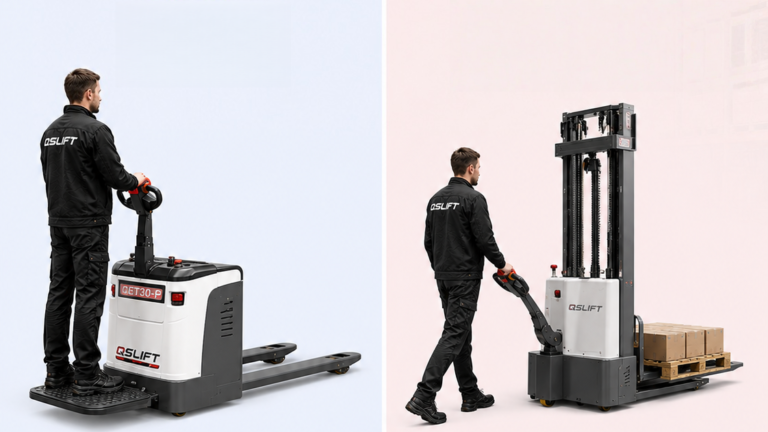
Model QSLIFT EPT15 o udźwigu 1,5 tony nadaje się do lżejszych zastosowań magazynowych i dystrybucyjnych. Zapewnia on łatwo dostępne ulepszenie dla klientów przechodzących z ręcznych wózków paletowych na zmechanizowany sprzęt do obsługi ładunków.
Tam, gdzie częściej wymagany jest udźwig 2 ton, model QSLIFT EPT20 zapewnia szerszy zakres zastosowań, pozostając jednocześnie na tyle kompaktowym, że sprawdza się w mniejszych magazynach i strefach załadunkowych.
Dealerzy mogą wykorzystać te modele do zaprezentowania:
- Deplasarea motorizată a paleților
- Manewrowanie w ograniczonej przestrzeni
- Kontrola niskiej prędkości
- Wygoda baterii litowej
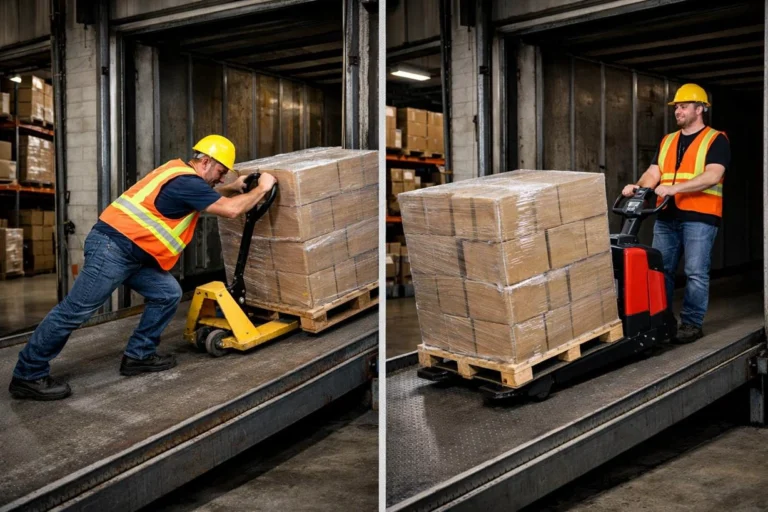
- Różnica w wydajności między obsługą ręczną a elektryczną
Nowy dealer nie musi koniecznie posiadać obu modeli. Wybór między EPT15 a EPT20 powinien opierać się na masie palet najczęściej obsługiwanych na rynku lokalnym.
Elektryczne wózki unoszące z masztem (Stackery): Dopasuj udźwig i wysokość masztu do rynku
Wybór stackera wymaga większej uwagi, ponieważ udźwig, wysokość podnoszenia oraz wysokość złożonego masztu wpływają na to, czy maszyna nadaje się do konkretnego magazynu.
For lighter and price-sensitive applications, the QES10E provides a practical entry point. It is suitable for customers that need electric pallet lifting and stacking without investing in a larger, higher-capacity machine.
Where customers regularly handle heavier loads, the QES20E offers a more appropriate solution. However, dealers should select it because the local market requires the additional capacity—not simply because a larger specification appears more impressive.
Mast configuration is equally important. A machine may provide the required lift height but still be unable to enter a warehouse if its closed mast is too high.
For this reason, the dealer should consider both the working height inside the warehouse and the height of entrances, doors and other access points.
What We Have Learned from the Serbian Market
Serbia provides a practical example of how local market conditions should influence the choice of demonstration machines.
Many Serbian small and medium-sized businesses are highly price-sensitive. They need reliable warehouse equipment, but their daily operations do not always require the capacity or performance level designed for large logistics centres.
For these customers, a compact model such as the QES10E can be more commercially relevant than a higher-capacity stacker. It covers routine pallet stacking while keeping the investment at a level that is more realistic for smaller businesses.
Warehouse access is another important consideration. Many local warehouses have relatively low entrances. A standard stacker may be able to reach the required storage height but may not be able to pass through the entrance with its mast lowered.
The low-mast QES10E-20 is particularly relevant in these situations. With its more compact mast configuration, it is better suited to warehouses where entrance height is a more important restriction than maximum lifting height.
This demonstrates an important principle: the best demo machine is not always the one with the highest specification. It is the one that solves a common local problem.
A Recommended First Demonstration Package
Expand the Fleet Using Customer Feedback
In most markets, a focused package with two core machines is enough to cover the most common warehouse applications. A third model can then be added according to the dealer’s target customers and sales strategy.
1. One Walk-Behind Electric Pallet Truck
The first machine should normally be an EPT15 or EPT20.
The EPT15 is suitable for customers with lighter handling requirements and provides an accessible upgrade from manual pallet handling. The EPT20 offers 2.0-tonne capacity and may provide broader coverage where heavier pallets are common.
2. One Pedestrian Electric Stacker
The second core machine should represent the capacity and warehouse conditions most commonly found in the local market.
QSLIFT offers three practical capacity options with a 2.0-metre lift height:
The QES10E-20 is suitable for lighter and more price-sensitive applications. The QES15E-20 provides a balanced middle option for dealers serving a wider range of small and medium-sized businesses. The QES20E-20 is more appropriate where customers regularly handle heavier pallets or require 2.0-tonne capacity.
The compact mast configuration of these 2.0-metre models is also relevant in markets where warehouse entrances are relatively low.
3. An Optional Model Based on the Dealer’s Sales Strategy
Dealers that regularly conduct demonstrations at customer locations may consider the SES15 self-lifting stacker as an additional demo machine.
Its self-lifting design allows the machine to load itself into and out of a suitable delivery vehicle, reducing dependence on a forklift or loading dock. This makes it particularly useful for mobile demonstrations, deliveries and customers that need to transport the stacker between locations.
Expand the Fleet When Demand Becomes Clear
Higher-lift and ride-on models should normally be added after the dealer has identified consistent local demand.
Possible next additions include:
This step-by-step approach gives the dealer enough equipment to demonstrate core applications while avoiding unnecessary investment in models that may not match the local market.
The first demonstration machines should help the dealer understand the market as well as generate sales.
After customer visits and product trials, dealers can review:
- Whether the EPT15 or EPT20 receives more enquiries
- Whether customers require the QES10E or the higher-capacity QES20E
- How frequently low entrance height affects stacker selection
- Which lifting heights customers request most often
- Which demonstrations lead to quotations and orders
- Which models may justify keeping in local stock
Future purchases can then be based on actual customer demand rather than assumptions.
Planning Your First Demonstration Fleet?
Contact QSLIFT to discuss your target customers, local warehouse conditions and suitable demonstration models.